
The two issues that inspire us to act:
The Issue of Child Abuse:
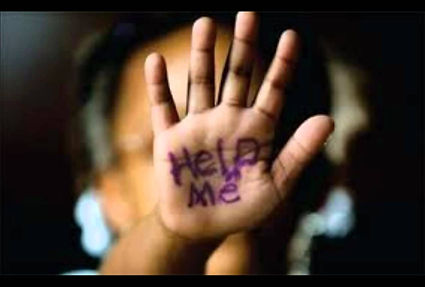
Every year, millions of reports of child abuse are made in Africa. It’s a terrible epidemic that we, at the Scarlet Rose Project are dedicated to put an end to. To do this, we need to first increase awareness of the issue itself.






The Issue of Sexual Harassment:
Sexual harassment: How it stands around the globe:
Any woman, in any country, will most likely be able to relate to this situation:
Walking down the street, alone, past a group of guys hanging out with nowhere to go. Her guard goes up, and preparation takes place. Many things could happen when she passes them.
It may be the words "hey, beautiful" or "hey, sexy," or being instructed to smile. It may be more intentional: standing in the way or blocking the path in hope of some interaction. It may get more aggressive, with hands reaching to inappropriate places.
The spectrum is far and wide, with one end harboring the potential for things to become more violent with physical abuse or rape.
"Rape is an extreme consequence of sexual harassment," said Rachel Jewkes, director of the What Works to Prevent Violence Against Women and Girls global program. But there are a "myriad of behaviors," she said.
The fact is that sexual harassment is part and parcel of daily life, particularly in public places, Jewkes believes. "It's used to curtail a woman's freedom."
In the streets of London, Mumbai, Washington or Lagos, the recent outpouring of stories from women using #MeToo and its many iterations has showed the uniformity of the problem -- irrespective of country and culture.
In 2017, the world has made one thing clear: Sexual harassment is everywhere.
When quantifying the problem on a global level, minimal levels of reporting and data limit what experts can provide to help prove -- and solve -- the problem. Based on what is available, here's how the numbers look in Africa.
West and sub-Saharan Africa:
Harassment affects millions of women across Africa, but in this region, sexual violence is more common.
More than 50% of women in Tanzania reported violence by their husbands or partners in a recent World Health Organization report, and that figure rose to 71% in Ethiopia.
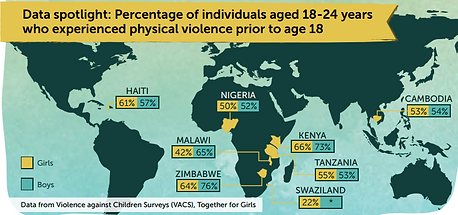
In Nigeria, child marriage rates are more than 43%, according to UN Women, andsix out of 10 children under 18 have experienced some form of physical, emotional and sexual violence, according to the National Population Commissionin Nigeria.
In South Africa, just 12% of women feel safe from verbal or physical abuse in their own neighborhoods, and 80% surveyed had experienced some form of abuse in the past year, according to a 2015 ActionAid report.
"There is a great deal of sexual harassment, but it doesn't constrain a woman's movements in the same way" as in Asia, Jewkes said. "It's not an honor-based culture or about the chastity of a female by family members."
In southern Africa, violence against women is high. "There is a much higher threat of rape" compared with other regions, she said. "A lot of women are raped."
According to the South African organization Rape Crisis, more than 53,000 rapes were reported to the South African Police Services in 2014 and '15, translating to nearly 150 per day. Worse still, it adds, many cases go unreported. "It's a well-recognized African problem," Jewkes said.
In Zimbabwe, years of extreme poverty have fueled the number of girls forced into prostitution or marriage to bring money to their families, said Debbie Brennocks, co-founder of the Sandra Jones Center, a home for orphans and children in crisis. Orphans cared for by extended family are also at risk, particularly if men are unemployed and at home, she said.
"Girls in Zimbabwe are particularly vulnerable to sexual assault, child marriage and prostitution due to severe poverty. They cannot fight for themselves," Brennocks said.
"A girl takes a big risk when she reports sexual abuse. If she is living with relatives, she risks being kicked out of her home. If the abuser is the breadwinner and is jailed, the family will have no financial support and means of survival. When that is the case, the child is often beaten and treated very badly. If the girl becomes pregnant, she is often forced to have an abortion, often in terrible circumstances," she said.
As a result, Brennocks adds, #MeToo has not had much resonance in Zimbabwe either, with most women not knowing about it and those who do unlikely to use it due to this stigma and the potential consequences of coming forward.
Middle East and North Africa:
One region where the #MeToo campaign has been somewhat quieter is the Arab world. Experts believe that the burden of harassment and abuse there is as rife as in any other region but that the voices heard are few and far between.
"There are so many reasons behind this silence," said Lina Abirafeh, director of the Institute for Women's Studies in the Arab World, in Lebanon. "I've heard trickles ... (but) people are scared."
She highlighted the stigma and shame associated with speaking out about experiences with sexual harassment or assault.
Though shame and stigma could be argued to be universal, Abirafeh says it's particularly an issue in the Arab world, where women risk losing their jobs and family by coming forward. Some families may even kill their daughters if they are no longer virgins, she added.
"Patriarchy is still very strong here," she said. "There's entitlement and a feeling of 'we've always done this' and that sexual harassment is not wrong."
One group at significant risk is migrant and domestic workers, who have no voice, said Abirafeh. "There's a minuscule chance of justice if they report violence," she said.
In Egypt, a 2013 report by UN Women found that 99% of women surveyed across seven regions in the country had experienced some form of sexual harassment. A report by Harassmap -- a company whose app aims to allow women to highlight unsafe regions of the capital, Cairo -- found that more than 95% of women sampled in the city had been harassed.
Abirafeh added that the reasons for high levels of harassment and violence against women across the 22 Arab states "are diverse." Some countries actively practice female genital mutilation, and others are in conflict, during which reports show women are often victims of sexual violence or rape.
Child marriage is common in some countries, such as Somalia and Yemen, according to the Population Reference Bureau, and only recently have countries such as Jordan repealed legal loopholes that enabled rapists to walk free if they married their victims. Lebanon announced plans in 2016 to end its law, but eight other Arab states still have laws that let rapists off the hook on condition that they marry their victims, according to Human Rights Watch.
"We're not doing very well in the region overall," Abirafeh said. "It's all about power and control."
Condensed from a CNN Article: http://edition.cnn.com/2017/11/25/health/sexual-harassment-violence-abuse-global-levels/index.html


Brochure Source: World Health Organization (WHO)

